Small Share of the Beer, Big Share of the Money
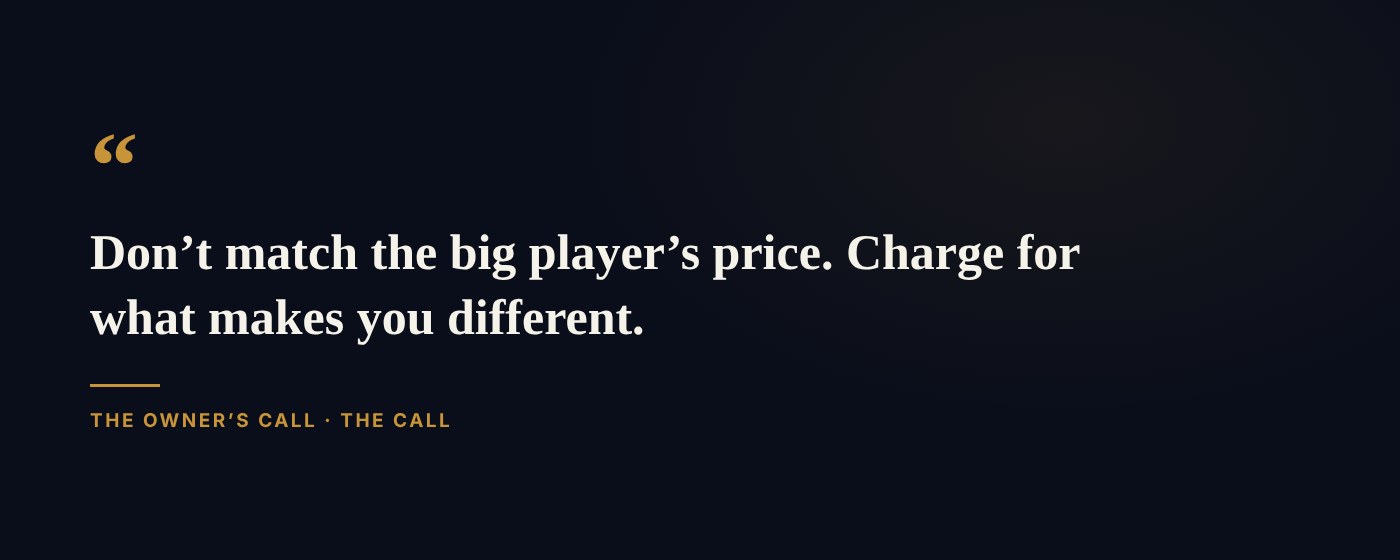
Craft breweries compete with big beer by not playing its price game. They sell beer that is local, different and worth talking about, and they charge more for it. The lesson works in any trade: charge for what makes you different instead of matching the big player's price.
Here's what the numbers show, where the story gets hard, and how to use it if you don't brew beer.
How do craft breweries compete with big beer?
Not on cost. A giant brewer runs huge plants, ships across the country and advertises nationally. Its cost per can is low, and no small brewer can beat it.
So most craft brewers don't try. They sell what the big ones can't easily copy: a name from down the street, a taproom where people sit and talk, a beer that changes with the season, a brewer you can actually meet. Then they put a price on it.
The Brewers Association, the trade group for these brewers, puts it simply: "An American craft brewer is a small and independent brewer." Small means 6 million barrels of beer a year or less. Independent means less than 25 percent of the brewery is owned or controlled by a beverage alcohol company that isn't itself a craft brewer.
How small is craft beer's share, and how big is its share of the money?
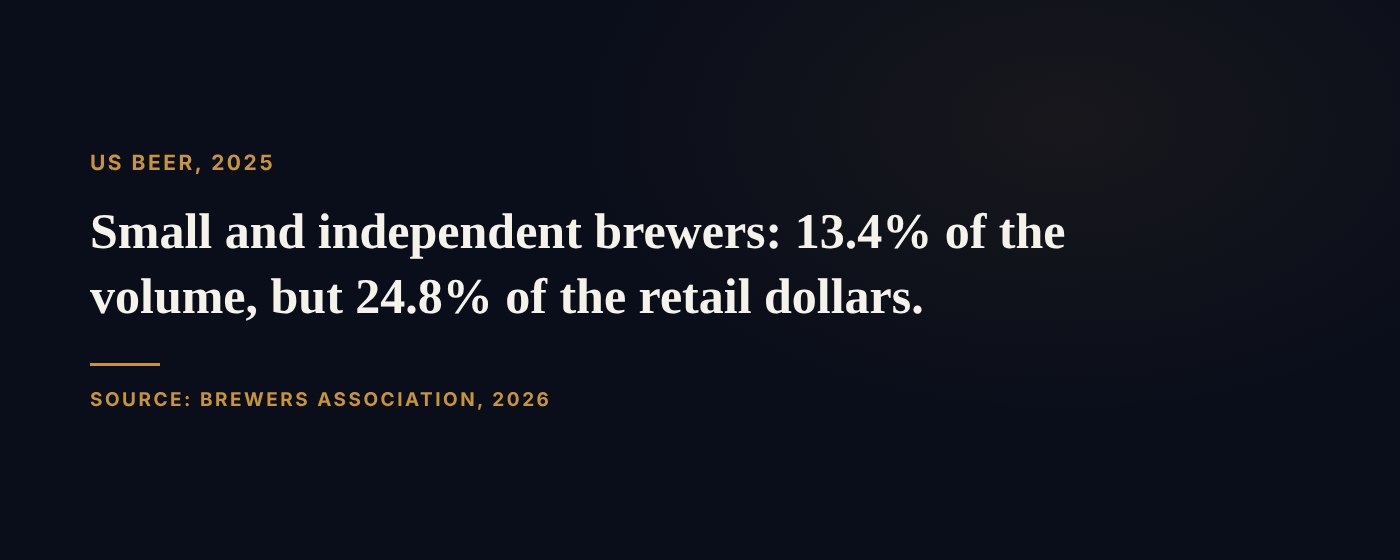
Here's the number that gives this article its name. According to the Brewers Association, small and independent brewers had 13.4% of US beer volume in 2025.
But they took a much bigger slice of the money. Craft's retail dollar sales were $28.0 billion, or 24.8% of the $113 billion US beer market.
Read that again. Craft's share of the dollars is close to double its share of the beer. For the same amount of beer, craft sells for more on average than the rest of the market. Customers pay that extra for something they want.
Craft didn't win the most cans. It won a far bigger share of the money than its share of the cans.
How did American brewing go from a low point to thousands of breweries?
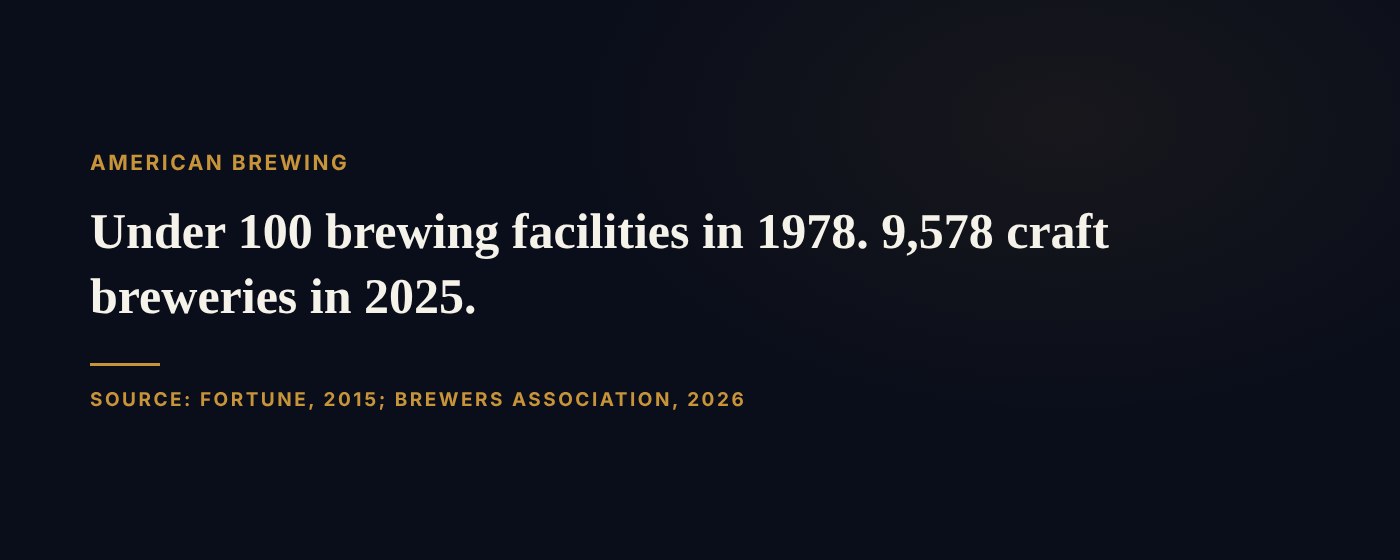
One brewery at a time. In 1978 the US had under 100 brewing facilities, "a low point for American brewing," Fortune reported. By 2015 the country had 4,144 breweries, a record, according to the Brewers Association figures Fortune cited.
By 2025 there were 9,578 craft breweries, the Brewers Association counts. By the definition above, every one of them is small and independent.
Is craft beer still growing?
No, not right now. That matters, so here it is plainly.
In 2025, craft's retail dollar sales fell 2.8%, and craft volume sales fell 4%. The Brewers Association's annual report calls it "A Year of Correction for Craft Beer." New brewery openings dropped to 300, while 481 breweries closed.
The whole beer market shrank faster, down 5.7%. So craft's share of the volume actually rose a little, from 13.2% to 13.4%, and its 24.8% share of the dollars held.
Two lessons sit side by side here. Even in a bad year, craft kept its share of the money. And a higher price is not a shield. It lasts only as long as customers believe the difference is worth it.
Why not just match the big player's price?
Because that is the fight the big player is built to win. Its cost per unit is lower than yours. Every dollar you cut comes out of a thinner margin than theirs.
Matching also sends a message. It tells customers you're the same thing, only smaller. Once they believe that, the only question left is price, and you lose on price.
Charging for the difference lets you pick the ground. The customer is no longer comparing your price to theirs. They're deciding whether your difference is worth it to them.
How can any small business charge for what makes it different?
Start by naming the difference. Here is what it can look like in other trades:
- Bakeries: bread baked this morning, cakes made to order.
- Coffee shops: a barista who knows your order, beans roasted nearby.
- Garden centers: plants that grow in your area, and advice on keeping them alive.
- Butchers: cuts made to order, trimmed the way you like.
- Cleaners and landscapers: the same crew every visit, who knows the place.
- Print and sign shops: same-day changes and a real person who answers.
Then take these steps:
- Say the difference in one sentence. If you can't, your customers can't either.
- Ask your best customers what they'd miss. If you closed tomorrow, what would they have to give up? That answer is what they're paying for.
- Give it its own price. A premium line, a rush fee, a made-to-order option. Don't hide your best work inside a price set to match the chain.
- Stop fighting on what's the same. If you sell something exactly like the big player's, either match it and move on, or drop it. Don't build the business on it.
- Show the difference where customers look. On the menu, the shelf tag, the quote, the website. A difference nobody sees earns nothing.
- Watch whether people still pay for it. If they stop, fix the difference before you cut the price.
When the price does go up, raise it and explain it once. For the cost side of the same margin, see how small owners buy together like a big company. And for picking what a giant can't do, read how independent bookstores came back after Amazon.