Why "Wait and See" on AI Is Already a Decision
Waiting on AI isn't a neutral choice. If you don't make the decision, a competitor, a vendor or an employee makes it for you. Deciding doesn't mean overhauling how you run things: pick one low-risk task to try, set one plain rule for staff, and put a date on your calendar to check whether it helped.
The scene below isn't about AI — it's about a dry cleaner and a price increase. It's here because it's the same pattern this whole article is about: the cost of not deciding in time.
Every business owner is going to make an AI decision this year. The only question is whether you make it, or it gets made for you.
That sounds dramatic until you actually run the numbers on what "waiting" costs. My partners and I ran three small businesses for twenty years — a collision repair shop, a drycleaner, a fast food counter. In every one of them, "we'll figure that out later" was never actually a neutral choice. It was a decision to let someone else figure it out first.
"Wait and see" feels safe. Here's why it isn't.
Waiting feels responsible. It feels like the careful, measured thing to do while the hype settles and the real use cases shake out. But here's the problem: while you're being careful, the decision doesn't sit still. It gets made anyway — just not by you.
Who's making the decision while you wait
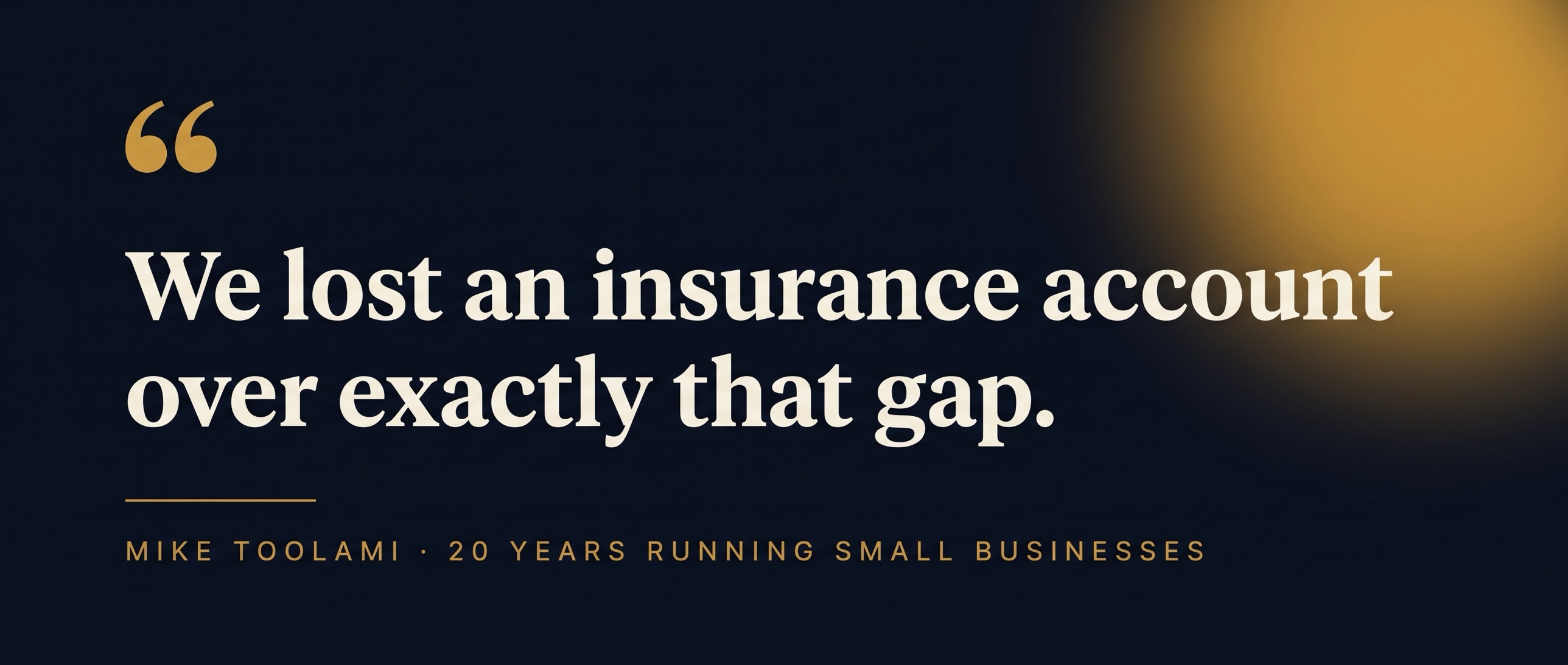
A competitor. I learned this one the hard way, in the auto body business — one of the most competitive fields there is. We were busy. Good busy — making solid profit, working hard, doing the actual work well. What we weren't doing was spending time working on the business instead of just in it. While we were heads-down, a competitor wasn't. We lost an insurance account over exactly that gap — the kind of steady, referral-driven work that actually keeps a shop full. Nobody made a dramatic mistake. We just didn't look up long enough to notice someone else was.
That's the same pattern showing up again right now, just with a new name on it. The owners who are heads-down running the day-to-day are the ones least likely to notice a competitor quietly getting faster, cheaper, or more responsive because they made an AI decision three months ago. You don't see it happening. You just eventually feel it, the way we did.
A vendor. Software you already pay for adds an AI feature and turns it on by default. Nobody asks you if you want it; it's just suddenly part of your workflow, making decisions about how customer data gets used or how a quote gets generated, whether you signed off on that or not.
An employee. This one's the quietest and the most common. Someone on staff is already pasting customer information into a free chatbot to draft a reply faster, because it's faster and nobody told them not to. They're not being reckless — they're just solving their own problem the fastest way they found. Whether that's fine or a real liability is a decision. Right now, nobody's making it. It's just happening.
What deciding actually looks like this year
Making the call doesn't mean overhauling how you run things. It means three small things:
- Pick one task worth trying — something repetitive, low-risk, and easy to undo.
- Set one plain rule for staff: what's okay to use AI for, what isn't, and where customer information can't go.
- Put a date on your calendar to actually check whether it helped.
That's it. Not a strategy. A decision.
Read the video transcript
[Clerk, to shop owner:] "You raised prices again?"
[Owner, alone after close:] "Solvent's up. Rent's up. And I'm scared of losing her over two dollars."
[Closing card:] The Call — Make the call yourself, before someone else makes it for you. Rule of thumb: if you haven't decided in 30 days, a competitor, a vendor, or an employee already has.